In September 1944 the Filthy Thirteen took part in Operation Market Garden, the Allied airborne push into the Netherlands, where the section was assigned to help defend bridges in the Eindhoven area.
The campaign
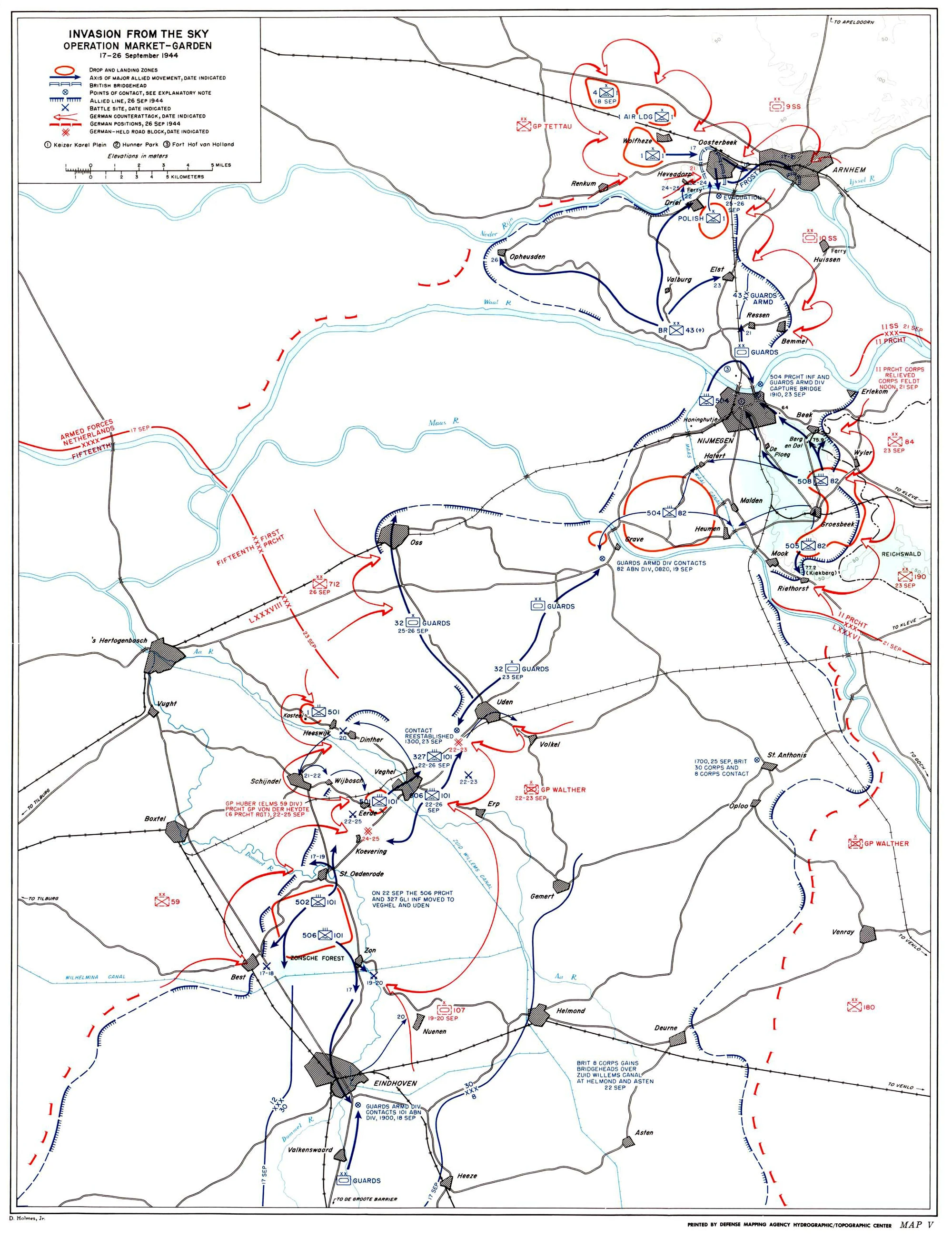
Operation Market Garden was an ambitious Allied attempt to seize a corridor of bridges through the Netherlands in September 1944. The 101st Airborne Division landed in the southern part of that corridor, around Eindhoven, and the demolition section’s role centered on the bridges there.✓ Verified
What happened to the section
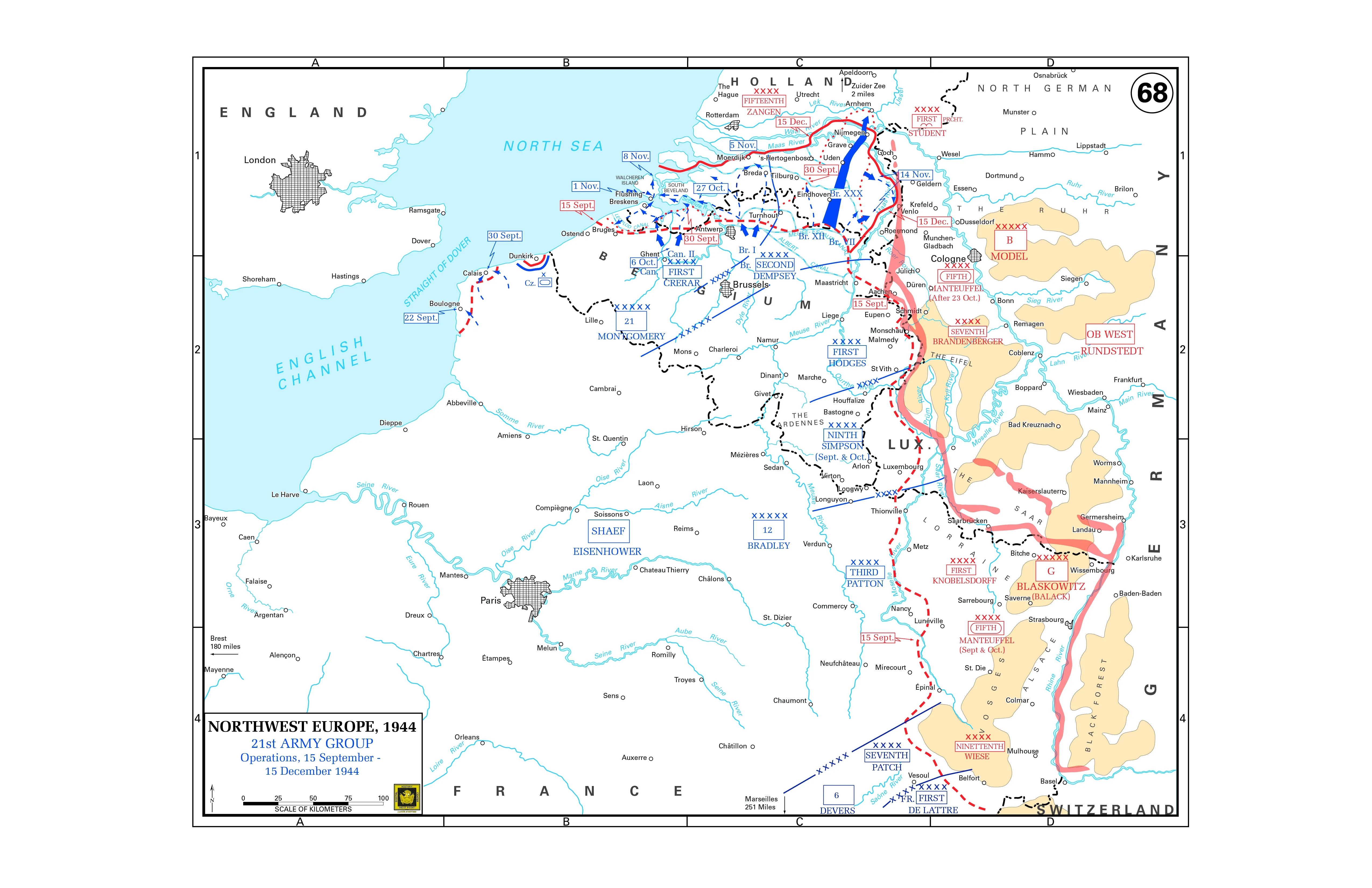
According to accounts, German bombing in the Eindhoven area inflicted heavy losses on the demolition men during this period. It was around this stage of the war that McNiece moved up and Jack Womer took over as the section sergeant — the one original member widely described as serving through Normandy, Market Garden, the Battle of the Bulge, and the final advance into Germany.◆ Well-attested
101st Airborne Division parachute drop over the Netherlands during Operation Market Garden, September 1944. U.S. Army photograph; public domain.
Sources
Womer & DeVito, Fighting with the Filthy Thirteen (2012); U.S. Army / 101st Airborne campaign material.