A demolition mission over the Douve River bridges, a scattered and costly drop, and the survivors’ fight toward Carentan.
How to read this page✓ Verifiedin the record◆ Well-attested“according to accounts”✦ Legendclearly marked as lore
In short
On D-Day, June 6, 1944, the Filthy Thirteen jumped into Normandy with a demolition mission: to secure or destroy the bridges over the Douve River. The drop was scattered and costly, and the survivors, led by Jake McNiece, fought on toward Carentan.
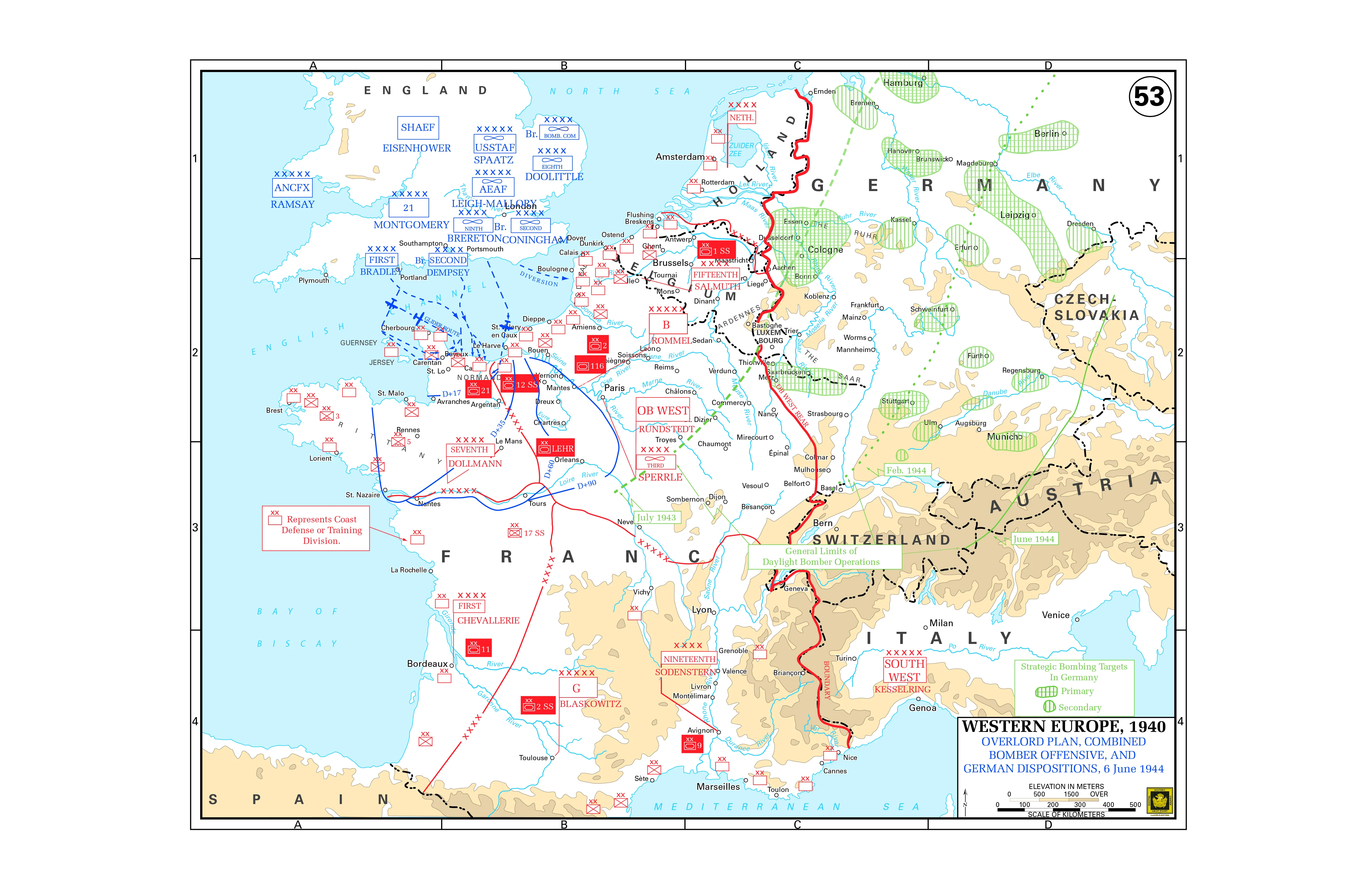
The OVERLORD plan, the Combined Bomber Offensive, and German dispositions in Western Europe, 6 June 1944. Map: U.S. Military Academy, Department of History. Public domain.
The mission
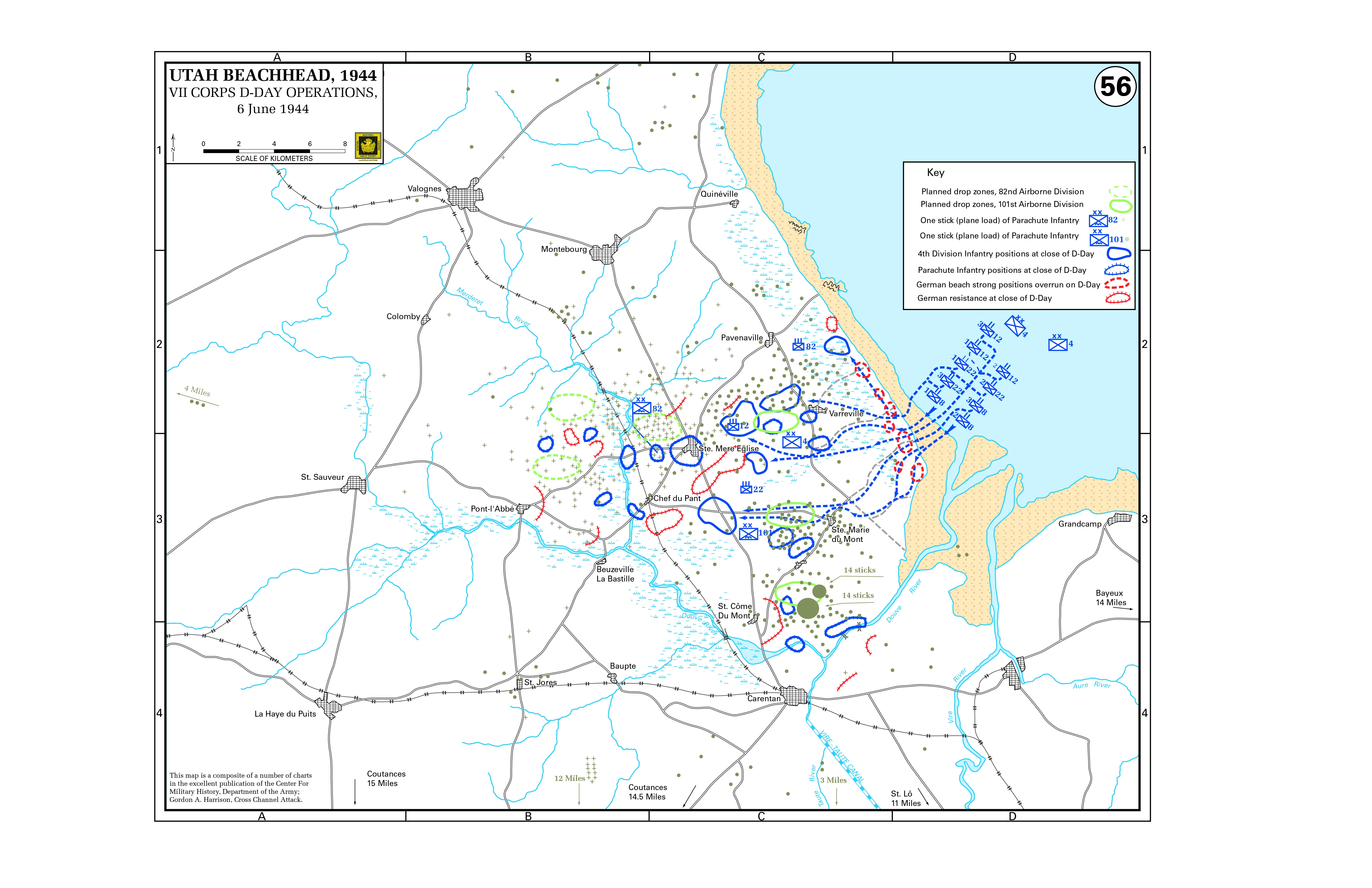
As part of the 101st Airborne Division’s role in the Normandy airborne assault, the demolition section’s D-Day objective was to secure or destroy the bridges over the Douve River — denying their use to German reinforcements moving against the beachhead. The men flew in with aircraft of the 440th Troop Carrier Group.✓ Verified
VII Corps operations behind Utah Beach on D-Day, 6 June 1944, showing the planned 101st Airborne drop zones and where individual sticks actually came down. Map: U.S. Military Academy, Department of History, after Gordon A. Harrison, Cross-Channel Attack (U.S. Army Center of Military History). Public domain.
A costly drop
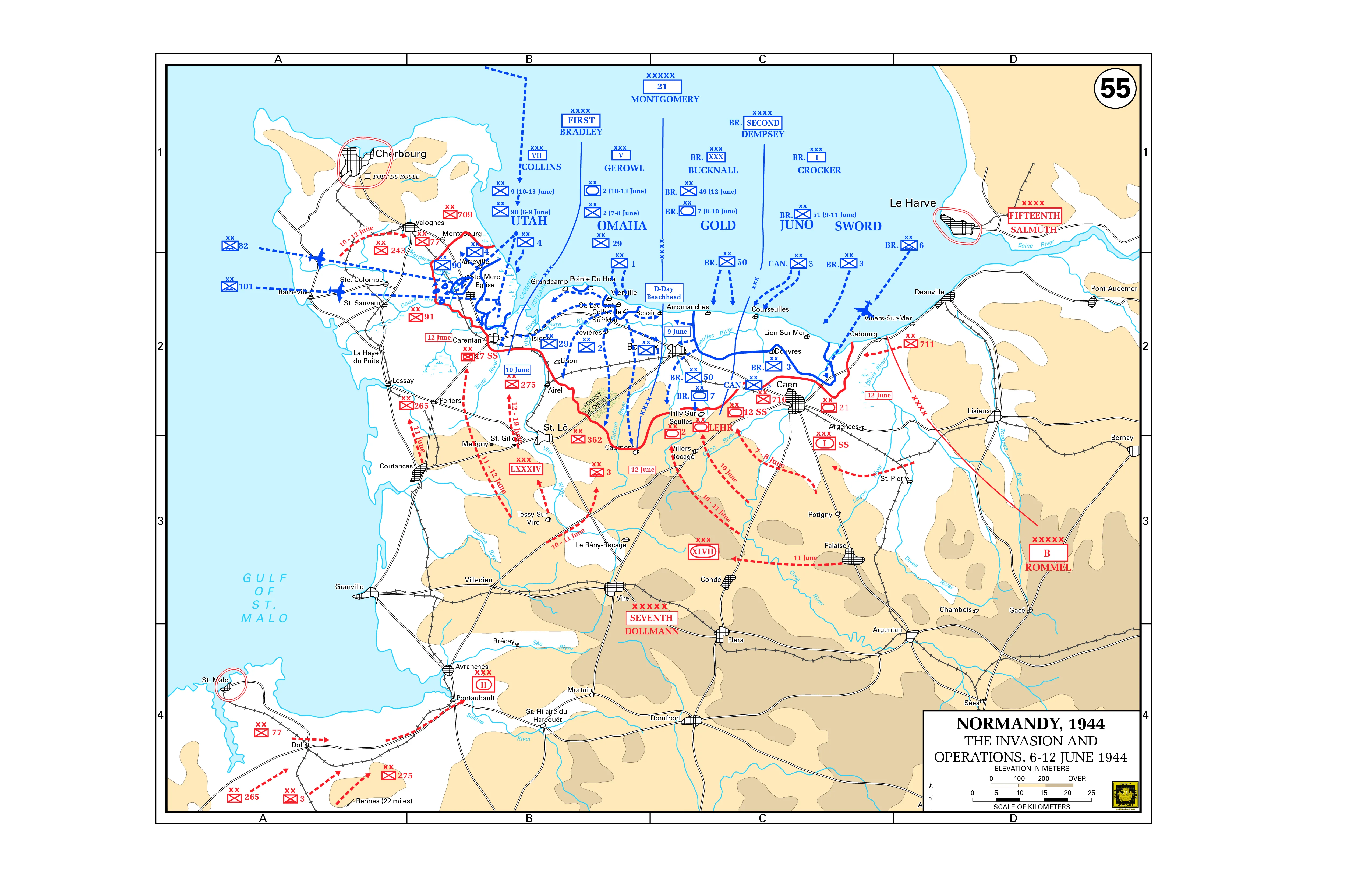
Like much of the airborne force that night, the section came down scattered and immediately took losses. According to accounts, roughly half the men were killed, wounded, or captured in and around the jump. The survivors, led by McNiece, regrouped and went on to take part in the fighting around Carentan in the days that followed.◆ Well-attested
The Normandy invasion and the first week of operations, 6-12 June 1944. Map: U.S. Military Academy, Department of History. Public domain.
We use cookies to ensure that we give you the best experience on our website. If you continue to use this site we will assume that you are happy with it.Accept